Project Ashtami
How it all began…
A visit to a waste segregation site six years ago changed Tarini’s perspective towards life. She had passed by that location for four years on her way to the school. The driver would typically ask her to roll up the car windows to avoid the foul smell. It was a busy place because she would always see women and girls working in that location-be it summer, monsoon or winter. Since they would whizz past that place, she asked her mother if they could slow down to see the activities going on there. The site was located in a spot where the road narrowed and was perched at the corner of a bridge that went over a nullah.
There she met two waste pickers who were manually segregating waste. It was a hot afternoon and the stench of the rotting garbage was over powering. Flies and mosquitoes were all around and it was uncomfortable standing in a spot without being bitten. Yet the two waste pickers continued to work quietly and efficiently sorting through and making neat piles of certain recyclable items which they hoped to sell by the end of the day.
Their existence depended upon generating enough funds to purchase groceries and meet basic expenses to get through the day. Tarini found out that they had been doing this work for a long time: nearly two decades. They smiled at her and were very pleasant as they spoke at length about the advantages and disadvantages of their profession, challenges faced by them and their aspirations. Like all mothers, they wanted their children to be educated and lead good lives. Unlike most working people Tarini knew, these waste workers had no buffer in case they fell sick or needed medical treatment. They did not have a basic guaranteed daily wage nor did they have access to medical care or any social security once they retired.
They were “informal workers”. What that meant was that they always remained on the fringes of poverty while the community and the waste dealers (generally men) benefitted from their cheap labour. Tarini decided to make a difference. She wanted to bring due dignity to the waste pickers.
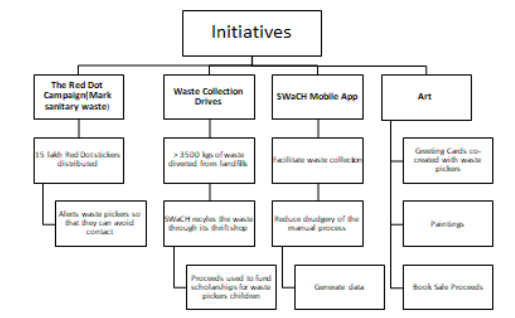
She did not know where to begin. After some brainstorming, she thought of conducting a waste collection drives in her community which has about 4000 residents. She was not sure if the governing body would allow it. Fortunately they did and the first drive yielded a small truckload of items comprising discarded clothes, toys, household items and books. That was the beginning of several waste collection drives that were conducted to facilitate recycling of waste. This initiative led to other projects for the benefit of the waste pickers over the next few years. The Red Dot campaign highlighted the need for proper segregation of sanitary waste; co-creation of art with waste pickers benefited aged waste pickers, an android mobile app design facilitated waste collection drives and an e-book.
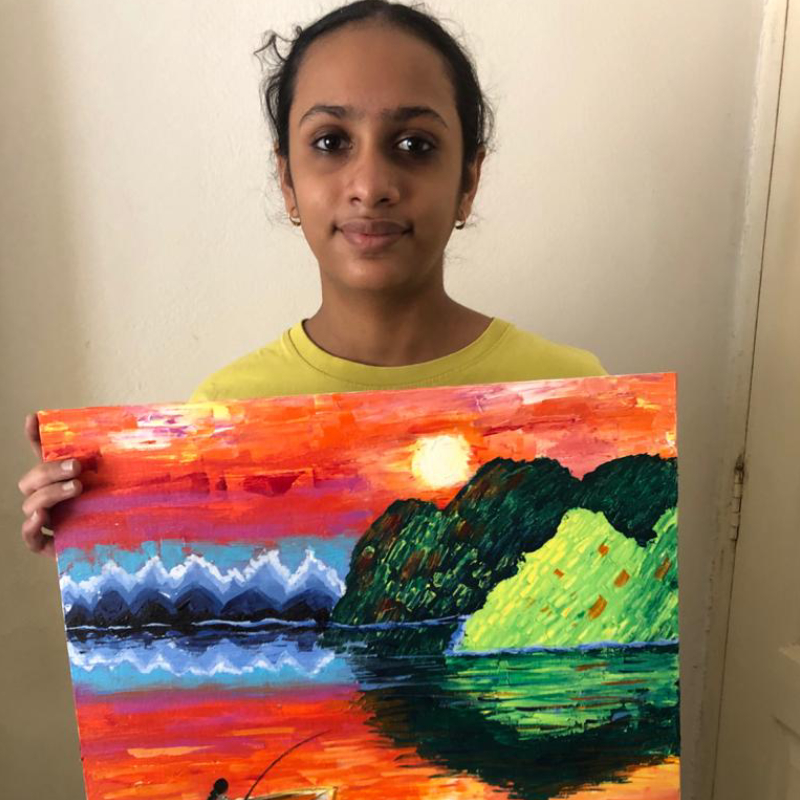
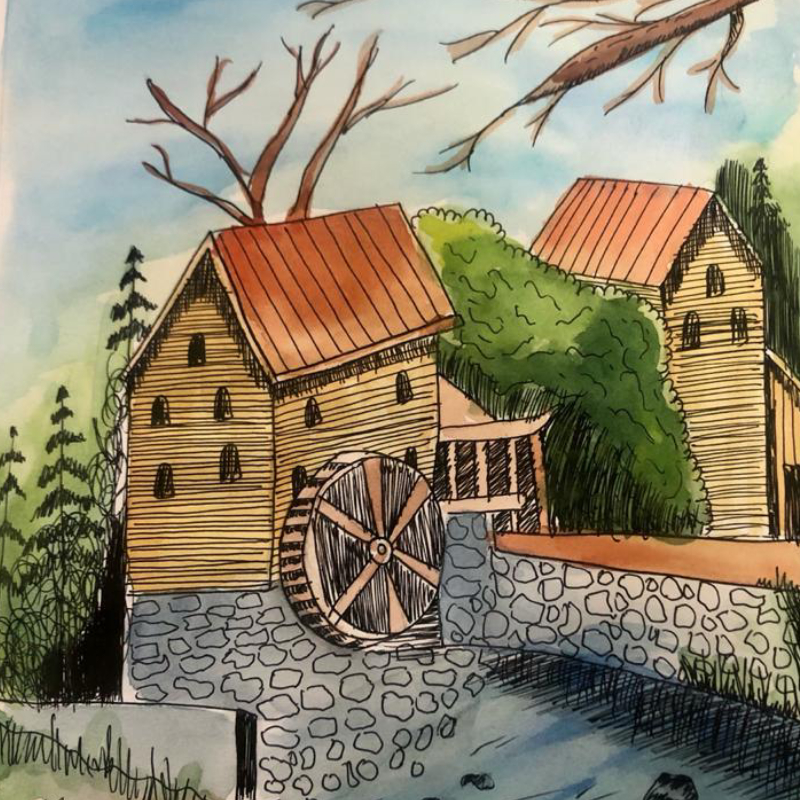
Tarini enjoys painting, craft projects, writing, reading and spending time in the midst of nature.
Stats on Waste:
62 million tonnes of Municipal Solid Waste is generated annually in India. The projection is ……
I billion sanitary pads are discarded every month. Sanitary Pads take 500-800 years to degrade and that too into microplastic. This microplastic finds its way into our food chain.
Slide on Project Ashtami Initiatives from Tedx Talk:
Art Works: